


%20(1).png)


The Ground Reality: Roadblocks to Attachment
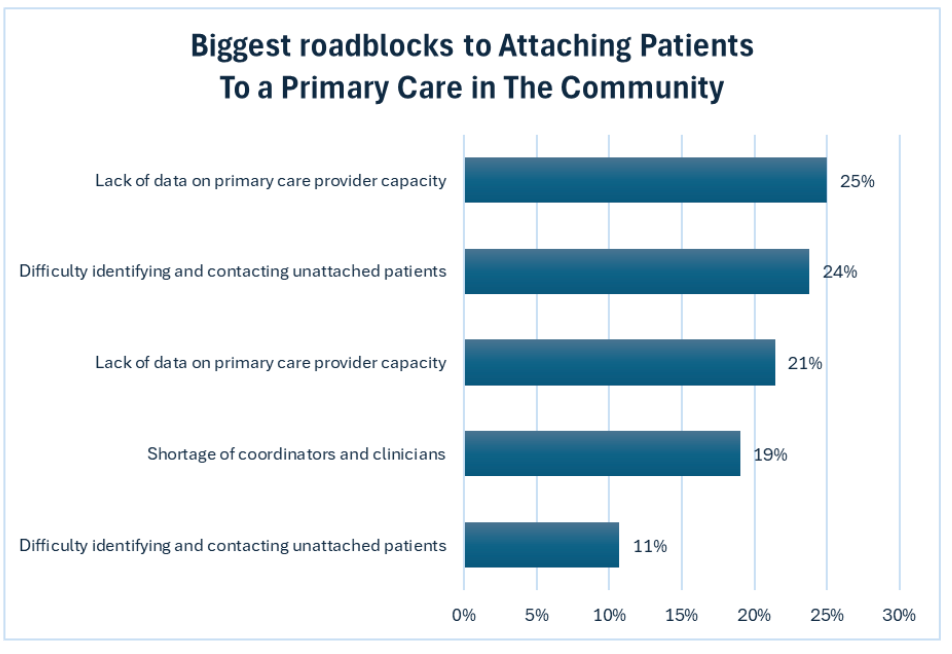
To kick off the session, we polled our attendees on the biggest roadblocks they face when trying to attach patients in their local communities.
A live poll of over 130 attendees revealed a fragmented landscape of challenges:
- Lack of High-Fidelity Data: 25% of participants cited a lack of data on primary care provider capacity as their biggest hurdle.
- Identification Gaps: 24% struggle with identifying and contacting unattached patients.
- Coordination Strain: Siloed EMR systems and a shortage of clinicians further complicate the workflow.
These results confirm that attachment isn't just a human resource problem; it is a data and coordination problem.
The "Invisible Barrier": Digital Friction and the Login Crisis
Even when capacity exists, a technical "invisible barrier" prevents it from being utilized efficiently.
According to the 2024 National Survey of Canadian Physicians by Canada Health Infoway, the infrastructure itself is often the enemy of productivity:
- The login burden: 66% of Ontario GPs report that multiple logins are required to access different clinical systems.
- The time sink: 48% of Ontario GPs say it simply takes too long to sign in and use these systems.
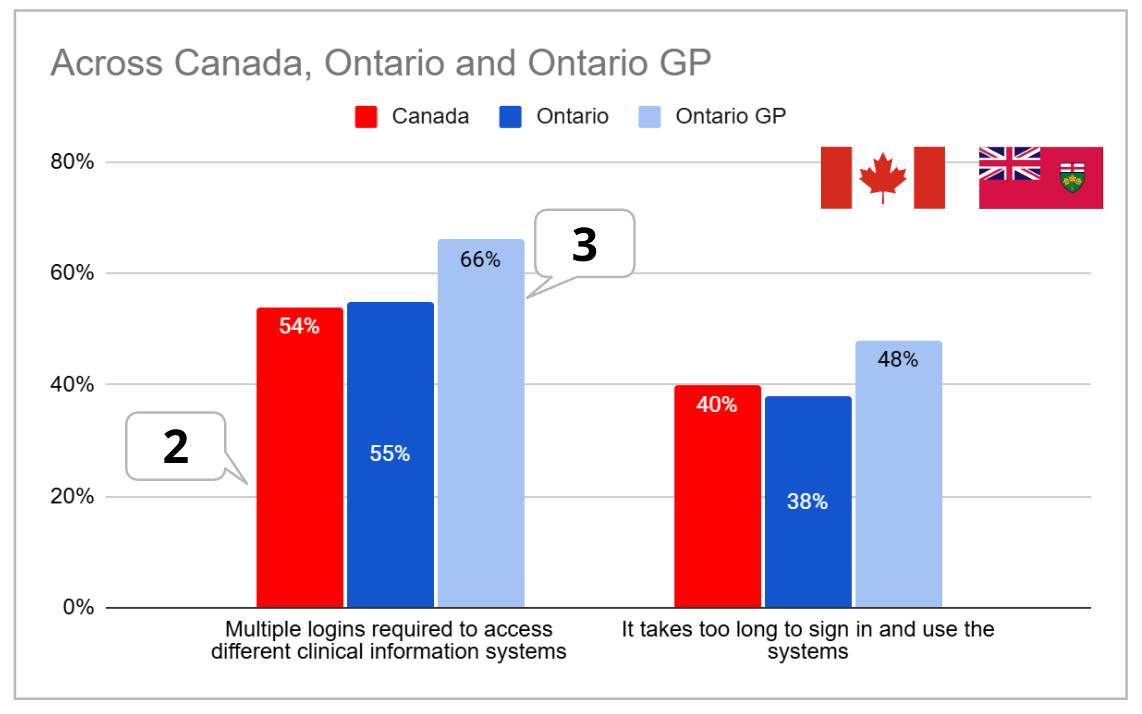
For an Ontario GP, digital friction is the third biggest barrier to providing care. If we want clinicians to take on more patients, we must first reduce their administrative load.
The Solution: A Scalable "Common Infrastructure"
IDENTOS, Amplify Care and Empower Health propose a combined scalable attachment solution utilizing the strengths of all three partners to streamline the attachment process.
In this ecosystem, IDENTOS provides the "trust exchange" layer (the DTX), while Empower provides the high-fidelity data layer, and Amplify provides the change management expertise.
1. High-Fidelity Data (Empower Health)
Ryan Doherty (Founder, Empower Health) explains the necessity of a "governed data layer". Unlike provincial data that may include retired physicians or home addresses, Empower’s directory provides real-time, validated information on:
- Clinicians actively accepting new patients.
- Dynamic hours (including confirmed holiday availability).
- Granular details like languages spoken and specific clinical interests..
2. Frictionless Access (IDENTOS)
IDENTOS provides the Digital Health Trust Exchange (DTx), the core infrastructure of this integrated solution. By leveraging this exchange and the Health Application Lightweight Protocol (HALO), clinicians can launch necessary tools directly from their EMR using Single Sign-On (SSO)—eliminating the need for yet another set of credentials.
3. Change Management (Amplify Care)
Ted Alexander (VP Partnership, Amplify Care) emphasizes that technology alone isn't enough. Amplify Care focuses on "Practice Facilitation" - working on the ground to align digital tools with the actual workflows of interprofessional care teams to meet the Quintuple Aim.
Innovation in Action: GIS Mapping & AI for Regional Planning
One of the most compelling segments showcased how high-fidelity data enables GIS (Geographic Information System) mapping.
- Supply vs. Demand: OHTs can now map exactly where unattached patients live relative to clinics that have the capacity to take them.
- AI Forecasting: By modeling population changes and after-hours access, OHTs can predict the impact of opening new clinics or adjusting staffing levels.
Are You Prepared for the Shift?
A final poll during our session revealed a significant knowledge gap in the industry.
Insight: 56% of attendees reported being "Unaware" of HALO standards.
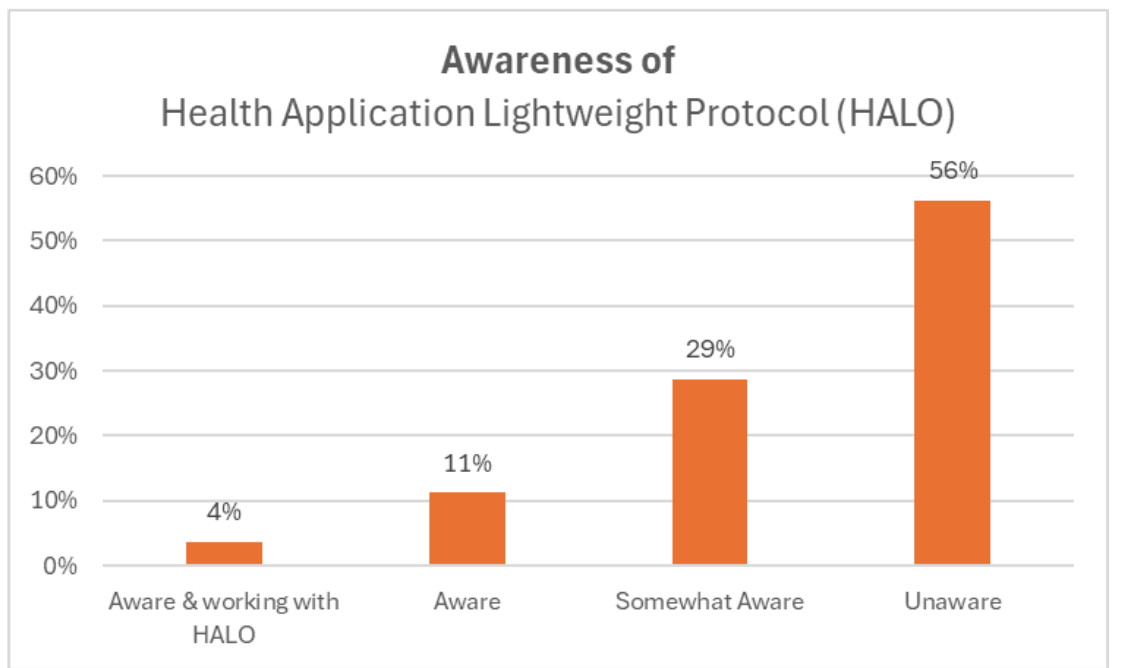
As Ontario pushes toward more integrated care, understanding these standards will be the difference between scalable success and technical debt.


