


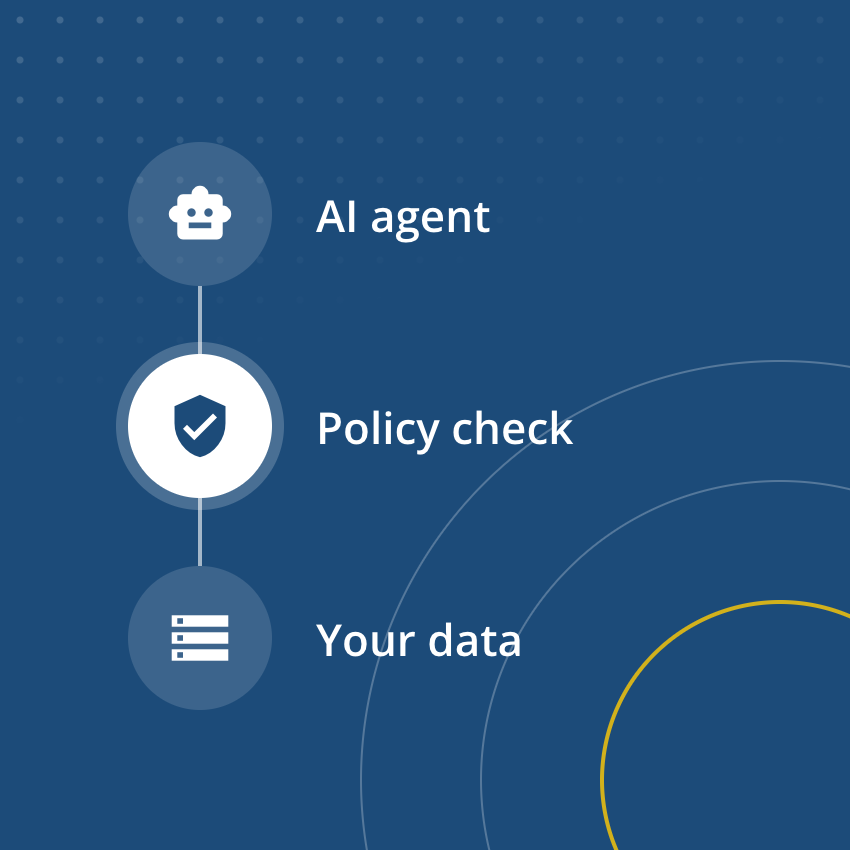
AI is already inside your systems
In most organizations, AI is already in use: employees opened a browser tab and started, and teams wired agents into email, code and customer data, often with no oversight and no record. According to IBM and Ponemon Institute’s 2026 Cost of a Data Breach Report, security incidents involving unapproved “shadow” AI more than doubled this year, to 43%.
But every access system those organizations own was built for people: a person, a role, an offboarding date. People’s access is broad, but their behaviour is bounded. An agent is different. As identity pioneer Eve Maler puts it, an autonomous AI agent is fundamentally a “most privileged” engine. It often borrows a person’s credentials or a shared account, decides at runtime what to touch, and can be manipulated mid-task. Most organizations can’t say which agents are running, limit what they do, or show an auditor what they did.
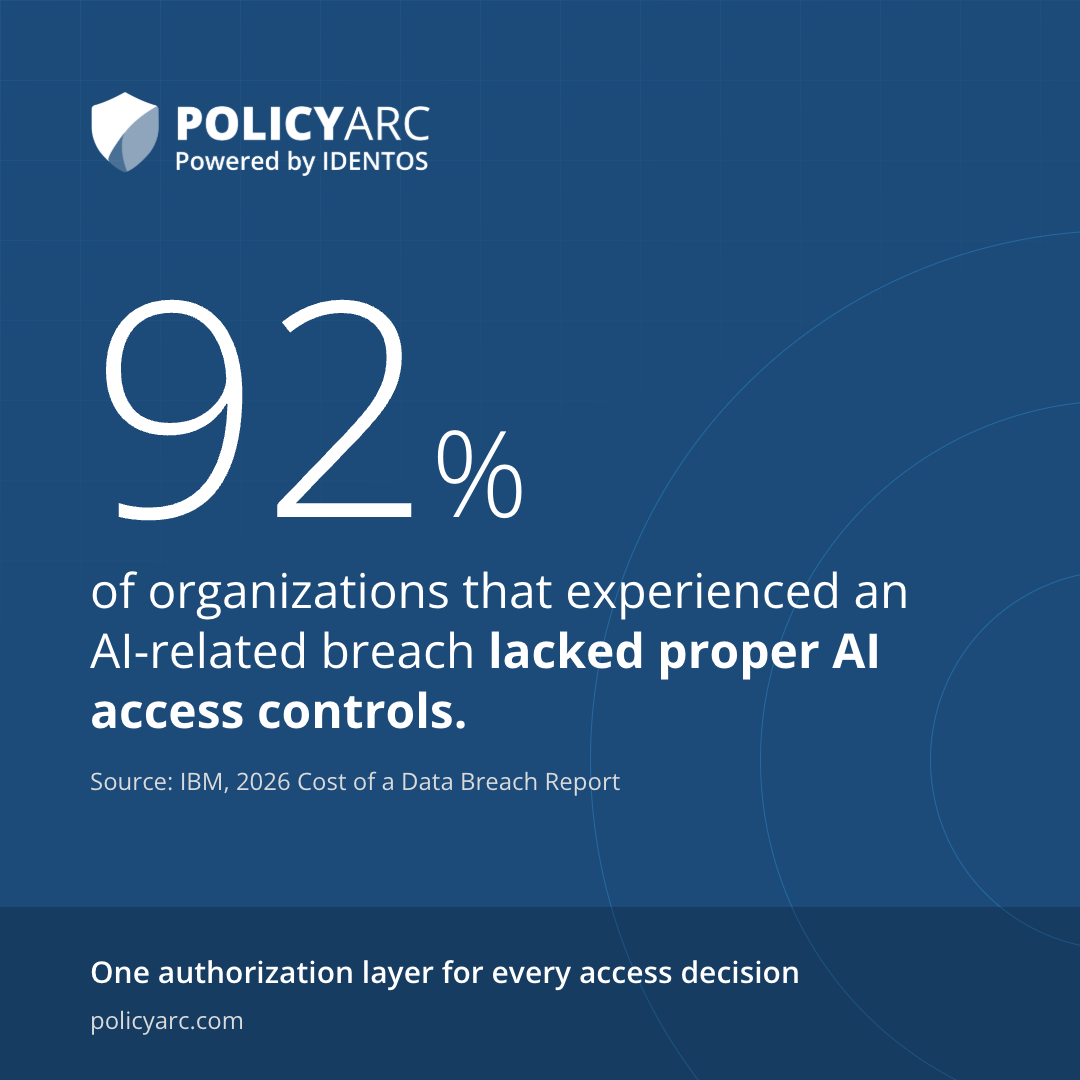
The same report found AI-related breaches cost an average of US$5.33M, about $630K more than other breaches, and 92% of organizations hit by one lacked proper AI access controls.
Zero trust has been the answer for a decade, but most programs stopped at verifying who logs in, not what an actor does next. Agents make it urgent to go further. For a deeper look, read The Architecture of Trust series by our CEO Mike Cook and Eve Maler, Founder and President of Venn Factory: Beyond the Handshake, on why the login is only the start of the access problem, and Why Identity is Foundational but Authorization is the Frontier, on why policy-based access fills the gap.
Define, decide, prove
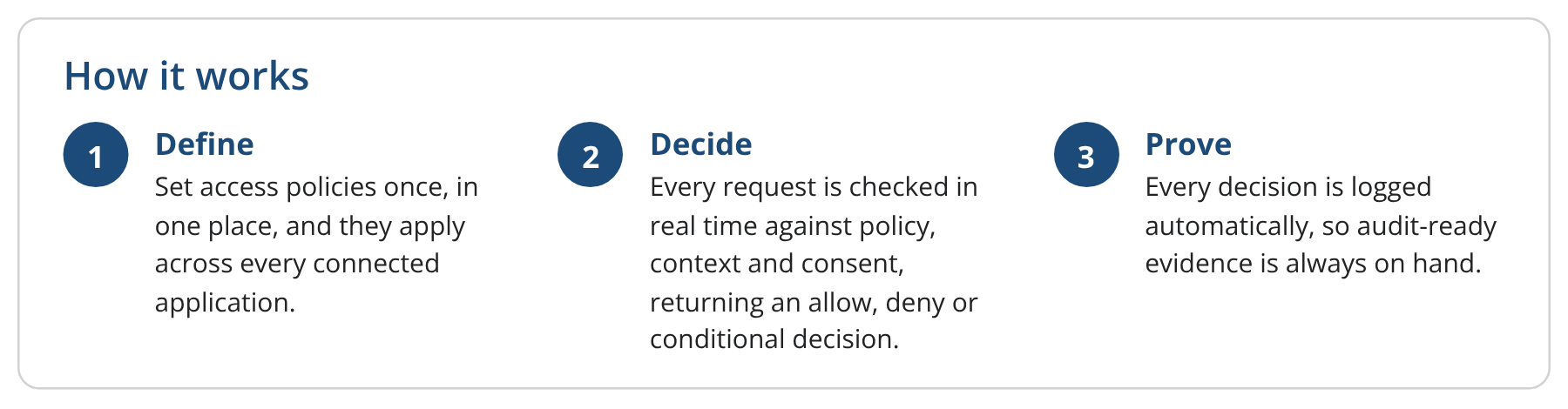
Define. Every AI tool and agent must be registered before it gets access, so you have a live inventory, and anything unregistered is denied. You set what each can do, starting from ready-made policies: a coding agent might edit tickets, while a security scanner can only read.
Decide. Every action is checked against policy, not just at login, with different rules for people, AI tools acting for people, and autonomous agents. An AI assistant can be blocked from contracts or employee records, even when the person behind it could open them. If an agent goes rogue, one policy change cuts off its next request everywhere.
Prove. Every decision is logged, showing whether a person or an agent acted, and can be exported for auditors. The same controls apply to every person and service in your systems, not just agents.
Four questions to ask about every AI agent
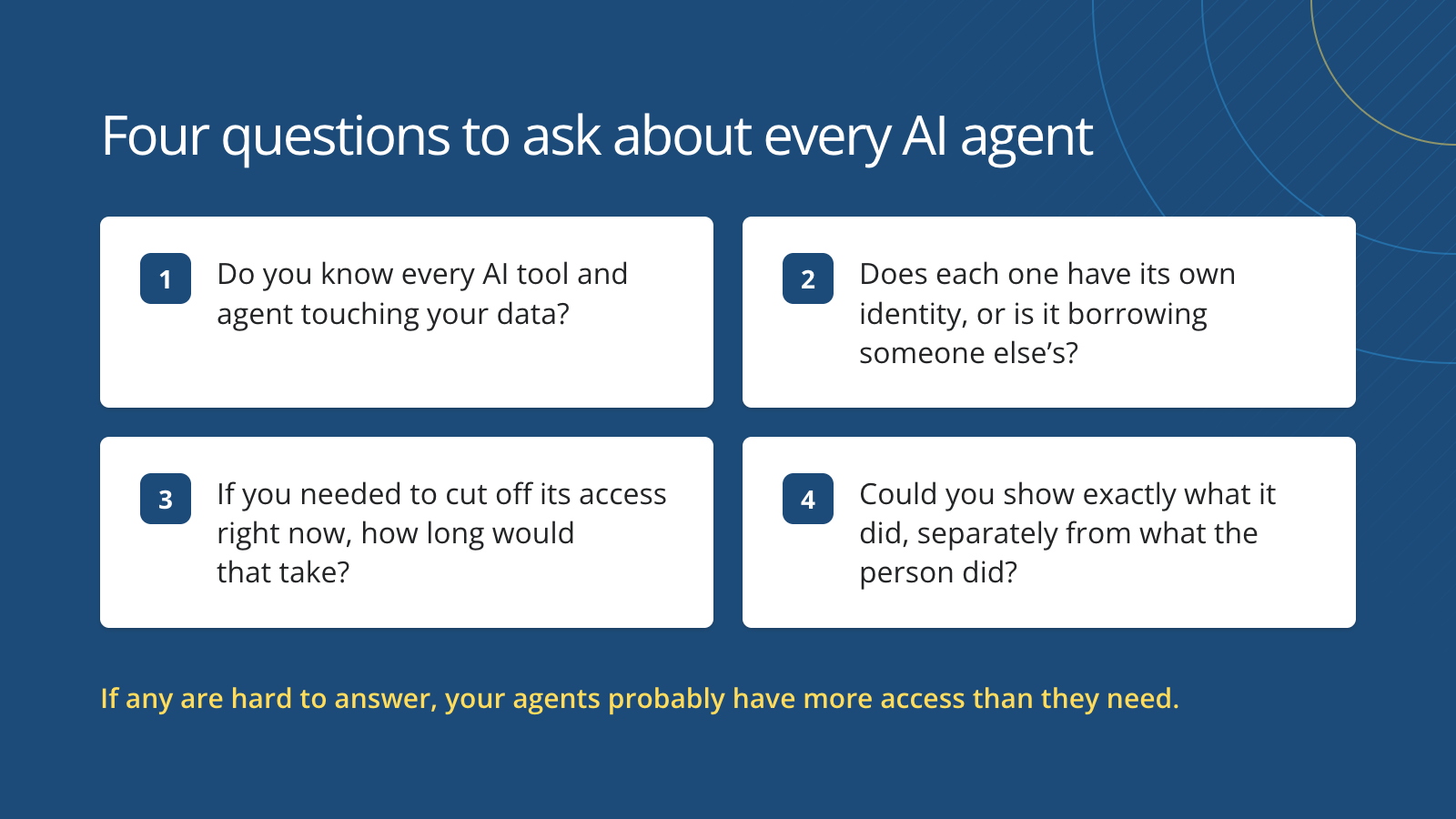
- Do you know every AI tool and agent touching your data?
- Does each one have its own identity, or is it borrowing someone else’s?
- If you needed to cut off its access right now, how long would that take?
- Could you show exactly what it did, separately from what the person did?
If any of those are hard to answer, your agents probably have more access than they need.
Why we built it this way
IDENTOS has spent more than a decade securing access in Canadian health and government, where every access decision may need to be explained to an auditor or regulator. PolicyArc carries those lessons forward, and we run it on our own AI agents too.


